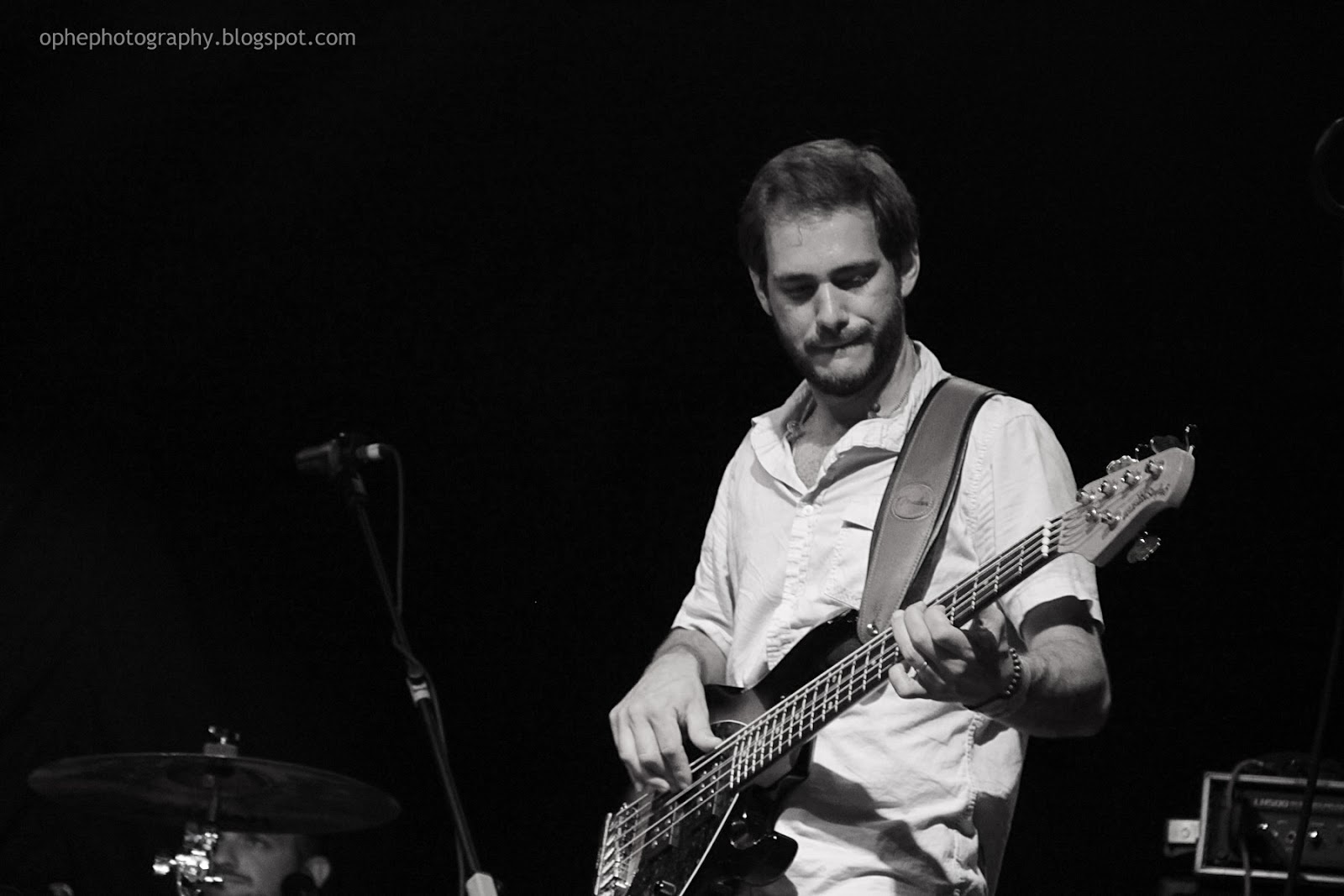
On the 29th of June, I decided to stay after the workshops at SCV for the night concert. Although I was not assigned to cover the concert, but I had requested for the photographer's pass from the event organiser. Since one of my hobbies was taking photos, this was the right time to make use of the golden opportunity to capture some nice shots from the press pit. The press pit had limited access, so I was really grateful for having the chance to experience things for myself. Let me be frank I am just an amateur photographer. Never had any formal education on photography. I teach myself on every single thing such as using DSLR camera, edit photos in Photoshop, photography techniques, theory and so on. All these are possible with Youtube, Google, magazines, observation and conversation with experts in the field. So, here are some of the photos I took during the second night's concert. I did not do much editing on these photos, I was just experimenting with the TV mode on my EOS Canon 550D during the concert. I let you judge for yourself.
Based on Day 1 experience, I understood workshops would begin on time. So, I drove as early as 10.30 a.m. from home and reached One Hotel Santubong about an hour later. I was quite worried there would be traffic congestion because I pretty much disliked being late. From OHS my fellow blogger friends and I took a shuttle bus to Damai Beach Resort to collect our daily passes or wristbands. We were not allowed to park anywhere else except OHS compound to ease the traffic congestion that very likely to occur especially on weekend. The shuttle service was frequent and public had to pay RM5.00 per person for one way trip.
Looking at the workshop schedule, I decided to attend all three workshops at Lagenda Hall from 2 p.m. to 5 p.m. As expected, more visitors came to RWMF on Saturday. So, it was not a surprised to see the hall filled with people in no time. The first slot was reserved for Irish dance or Call of the Céili. Our dance instructor for the day was Mr. Rossa O'Snodaigh of KILA. He started off with throwing light upon the history of Irish dance which said to be continuously evolving. He also mentioned that this dance would be a very good workout. Well, it always seemed easy because we were the audience but not till you tried the Irish dance yourself! Believe me, it was like running fast on a treadmill for at least half an hour. Realising my lack of stamina and still healing from a torn ACL did not hinder me from having fun with complete strangers. The unique thing about RWMF's workshops was you can grab anyone nearby to be you partner provided he or she did not have one too. For a moment people forgot about their nationalities and differences by immersing in the pure joy which emanated from dancing. The funny part was when Rossa pointed out instead of doing it like the Irish folks, we were dancing like the 'Orang Utan'! I guess he was troubled by the sight of us not getting the dance steps right. In the end, we were asked to do the Gangnam Style and Orang Utan Style. Ha-ha. What mattered more in the midst of chaos was to enjoy the Irish music and dance.
The second slot was handed over to members of Korean Performing Arts, Palsandae. Their leader, Mr. Kim Woon Tae, could not join us as he was sick. However, the show must go on. During the Pangut Fever workshop, we got to see the traditional farmers' dance as well as the traditional mask dance. The first dance was energetic which featured shamanistic influence and acrobatic manoeuvre. It also accompanied by Korean traditional music instruments such as gong, flute and double-headed hourglass-shaped drum played with one stick and one hand. Performers were most of the time dancing in circle. This dance was performed during planting, harvesting and on other agricultural events. It was to lift the spirit of farmers and provide them with working beat. The purpose of traditional mask dance was to ward off the evil spirit that may bring misfortune. It was believed to protect their properties, purify the village and to give thanks to the river and mountain spirits.
Perhaps the much awaited workshop for Day 2 was The Art of War. It showcased the Australians and the Africans challenge each other to a war dance duel. The Ibuyambo Ensemble (Africa) versus Nunukul Yuggera (Australia). I was told by fellow blogger friends this kind of workshop never been held. So, it was a new experience for those who came to the RWMF this year. As the battle was featuring two different tribes from two different continents, I was expecting a fierce dance off. And guess what, I was right! The hall was packed with spectators and not much space for everyone to move around. Even the stage was fully occupied. The battle was refereed by performers of RWMF. They were Soren Lund (HABADEKUK), Thomas David (PINE LEAF BOYS), Ivan Levacic & Konrad Lovrencic (KRIES) and Edgar Arboleda Campos (REY VALLENATO BETO JAMAICA). The field referee post was assigned to Thomas David. The dance battle reached its climax when some spectators had to choose side to back up either the Australians or Africans. Of course the booty shaking Africans could make more noise because their advantage was having the drums choreographing their dance moves, which also heighten the competitive mood among their supporters and fellow opponents. On the other hand, the Australians had their spears and supporters chanting to their war cry. While recording the process, my mind slipped into the thought of how our weights and the hubbub could potentially get the hall fall off its stilts! Finally, referees announced both tribes won and the civilians lost! Ha-ha. No big deal, we had so much fun, didn't we? I personally would love if this tradition of dance duel can be carried on. May be next time we can get our local Dayak warriors meet the Maori people at the same hall for the battle? Where will we place our bets?
I could not see what was going on in the middle.
The second day workshops ended with no civilian hurt. The crowd was indeed amazing. I stayed for the evening concert as I missed it the previous night.
The festival has brought together eclectic musicians and dancers from around the globe to a scenic location in Kuching, Sarawak Cultural Village. SCV is located at the foot of Mount Santubong, surrounded by lush rainforest and a short walk to a beautiful beach. It is a perfect setting for a musical event that named after the rainforest. Our experience and mood at the festival would have been different if it was held in the urban area. Set in the outskirts of a city certainly helped to capture more relaxing and refreshing feels which able to rejuvenate an exhausted body, mind and soul. To me it was an escapade to a paradise from the hectic daily working life.
The word WORLD was enough to excite someone like me. Not only it was my first time attending the Rainforest World Music Festival, but it also my first time blogging for a world event. It was like you were being thrown into the middle of the sea and expected to swim to your own safety without being taught the survival skills beforehand. As we know, experience is the best teacher. Therefore, challenge was instantly accepted!
The event began on the first day with performers conducting workshops for the public. I never quite got it when others referred to the daytime workshops as a 'gem' of RWMF. The workshops were conducted at three main venues such as Dewan Lagenda, Iban Longhouse and Theatre. Major crowd would normally swarm Lagenda Hall as I was informed. My guess the hall was big enough to gather a sea of dance enthusiasts and provide ample space for performers to manoeuvre.
The first slot of workshop kicked off by Bandari Dance and Songs from South of Iran. First they sang, then they danced. The performers were known as Mohsen Sharifian and the Lian Band. Their distinctive music instruments would be the Nay-Anban (bagpipe) and the Nay-Jofti (double-pipe reed flute). I did not stay for long as I had to hurry to the Iban Longhouse to catch up with another performance there. The crowd kept getting bigger when I was leaving.
As I reached my destination (Iban Longhouse) the workshop was already in progress. The performance entitled "Songs My Mother Taught Me" presented by numerous musicians. Among them were Mojmir Novakovic (KRIES), Rafly bin Muhammad Isa (RAFLY WA SAJA), Alp Bora (ALP BORA), Brian Hogan (KILA), Mathew Ngau (LAN E TUYANG), Reon Williams (NUNUKUL YUGGERA), Edgar Rivero (REY VALLENATO BETO JAMAICA), Drew Simon (PINE LEAF BOYS) and Javier Garcia (REY VALLENATO BETO JAMAICA). At this workshop we got to listen to songs from different countries and how they harmonised spontaneously. Their singing was impromptu. I believed it was not easy to get people sang in one accord especially when you never did it together and at the same time having to perform in front of the audience whom might expect something special at a higher level. They deserved a salute for being able to pull it off. This type of workshop would surely attract those who are more into singing.
After I took a few snapshots at the Iban Longhouse, I went back for the Body Rites workshop at Lagenda Hall. It was truly an interactive workshop as everyone got involved in learning the Aboriginal Australian dances led by Donald Dodd of Nunukul Yuggera. The other members of Nunukul Yuggera were Ashley Ruska, Montel Butterworth and Beau Broome. They performed a few dances before the workshop participants were taught how to dance the White Crane dance. I personally loved the sound of the Didgeridoo and always wondering how the sound was produced. The Didgeridoo is a wind instrument which existed around 1,500 years ago. Their leader did explain the Didgeridoo was played with continuously vibrating lips to produce the drone while using a special breathing technique. It required breathing in through the nose at the same time expelling stored air out of the mouth using the tongue and cheeks. The Didgeridoo was traditionally and originally played as an accompaniment to ceremonial dancing and singing. However, nowadays it is also for recreational purposes.
Nunukul Yuggera demonstrated a few Aboriginal Australian dances to the workshop participants.
Everyone doing the White Crane dance.
The last workshop for the day, SKINS, was probably the one which everyone anticipated the most. It was a percussion workshop on different drums from around the world. The drummers were Nceba Gonxeca (leader) playing Djembe, Mkokeli Masala playing N'goni drum, Fouad Achkir playing Tambour, Herwan Wiradireja playing Sundanese drum, Morteza Palizdan playing Dayareh, Soner Tezcan playing Turkish percussion, Edric Lai playing sea drum or Kompang and Dave Hingerty playing the Congas. The sounds of the pounding drums transmitted a rhythm of dance that eventually got everyone up on their feet and danced away to the beat. These drummers who came from different countries never performed together but somehow inexplicably all those different drums could be played in unison. That was mind-boggling!
Drums from different countries rocking the house.
Crowd shaking to the beat.
The Day 1 workshop ended well with participants left feeling entertained and happy. It certainly got me anxious of what would 'the gem' had to offer on the second day. I was told the crowd would come in the largest number particularly on Saturday.
This was the place to get the performers' CDs.
Free Yoga demonstration during interval (reminded me of a scene in Spiderman movie!).
A couple 'chillax' between workshops.
Yeah, the leopard print and the beautiful beads caught my attention.
The most famous party animal at RWMF 2013, Bryce William Wentworth.




.jpg)


